How to Store Potatoes for Winter (So They Last Until Spring)
How to store potatoes for winter: cure them two weeks, keep them dark at 40 to 50°F with high humidity, and check the bin weekly. A Tennessee homesteader's method.
by Joyce ·
dark, cool, damp — 40 to 50°F
Last October I pulled about sixty pounds of Kennebecs out of two raised beds behind our shed. By February I still had forty pounds of firm, sweet potatoes in a plastic tote in the basement. The year before, I lost half the crop by Christmas. Same beds, same variety. The difference came down to four habits, and you can copy every one of them this weekend.
Grow what you eat. Keep what you grow. Here is the keeping part.
Dig at the right timeskins should not rub off
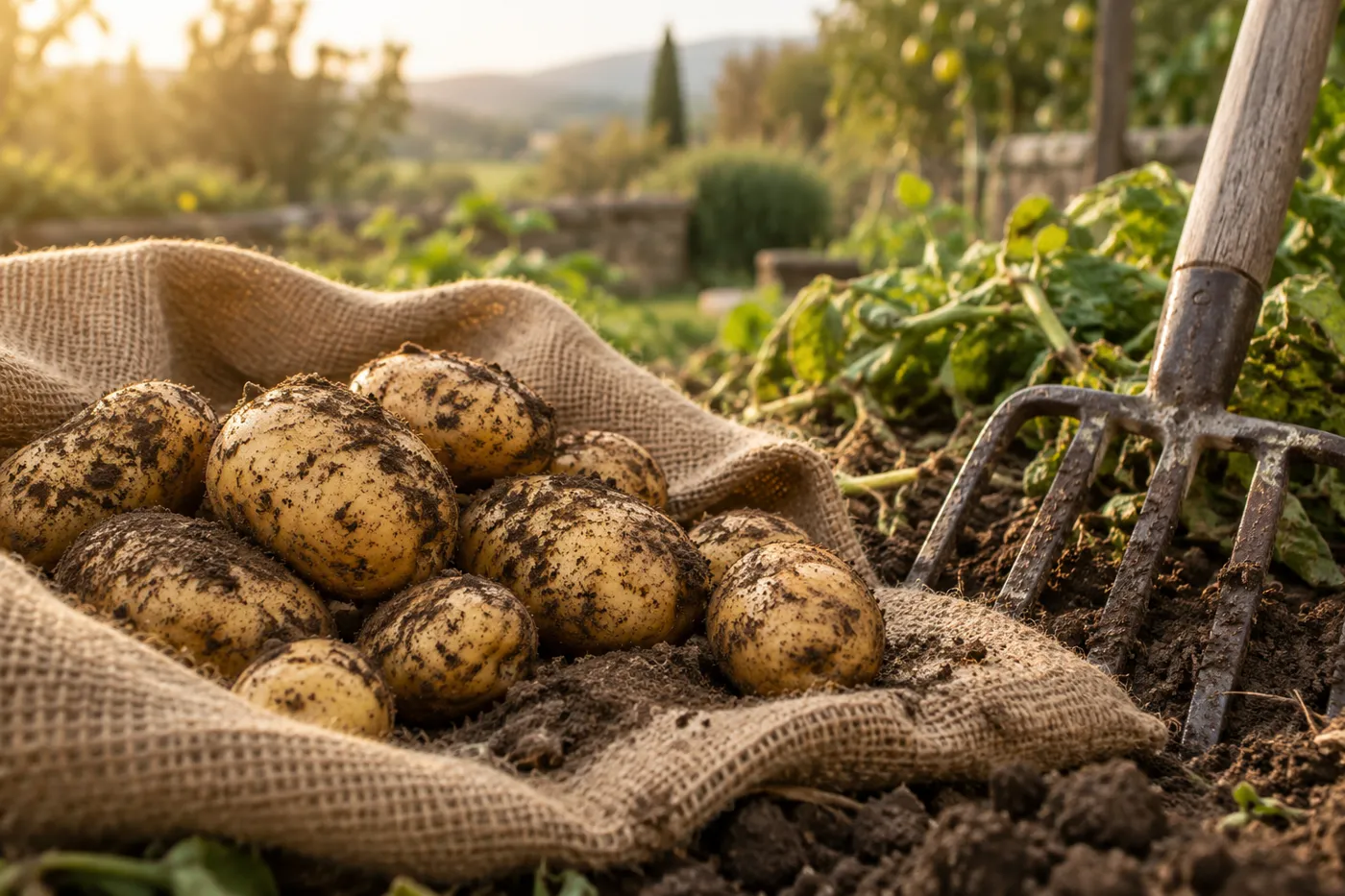
Wait until the vines die back on their own, then give the potatoes two more weeks in the ground. That wait lets the skins thicken. Rub one with your thumb. If the skin slides off, leave the rest alone for another week.
Pick a dry day. Wet soil sticks to the tubers and carries rot into storage. I use a garden fork and push it in a good foot away from the plant, then lever up. Every potato you stab goes into the "eat this week" bowl, not the storage bin. One cut potato can turn soft and take its neighbors with it.
Don't wash them. I know it feels wrong to put dirty food away. Brush off the big clumps with your hands and stop there.
Cure them for two weeks
Curing heals small scrapes and toughens the skin. Skip it and your potatoes start losing water and growing mold within a month.
Spread the potatoes in a single layer somewhere dark and humid, around 50 to 60°F. I lay old bath towels on the floor of our pump house and cover the potatoes with a second towel to block light. A closet, a garage corner, or a covered box on a porch all work if you keep the sun off them.
Leave them there ten to fourteen days. Then sort. Anything with a soft spot, a green patch, or a crack goes to the kitchen.
Find a cold, dark, damp spotdark, cool, damp — 40 to 50°F
Potatoes keep best at about 40 to 50°F with high humidity, around 90 percent, and no light at all. Most of us don't have a root cellar, and you don't need one. Here are places I've used or seen friends use:
An unheated basement corner, away from the furnace
An attached garage, against the wall that touches the house so they don't freeze
A cooler or a Styrofoam box in a mudroom
A crawl space with an easy door, if it stays above freezing
Put a cheap thermometer in the spot for a week before you load it. Our basement read 58°F by the stairs and 46°F in the far corner. That corner holds my bin now.
Keep potatoes out of the refrigerator. Below about 40°F the starch turns to sugar, and the potatoes taste sweet and brown too dark when you fry them.
Light causes the green color. Green skin means solanine, which tastes bitter and can upset your stomach. If a potato turns a little green, peel that part off deep. If it's green all over, toss it.
from the garden, this year
Choose a container that breathes
Potatoes need air and moisture at the same time. Sealed plastic bags trap water and rot the whole batch. Open shelves dry them out.
I use a 27-gallon plastic tote with a dozen half-inch holes drilled in the sides and lid. I layer the potatoes with dry newspaper between each layer, about three potatoes deep at most. Bushel baskets, cardboard boxes, and burlap sacks work too. Just cover them.
Store onions and apples somewhere else. Apples give off ethylene gas and onions put out moisture, and both make potatoes sprout early. Mine sit on the opposite side of the basement from the onion braids.
Check the bin every week
Once a week, usually Sunday after church, I lift the lid and smell. Rot has a sour smell you'll catch before you see it. Then I put my hand down the side and feel for anything soft.
Pull out the bad ones right away and eat the ones with small sprouts first. A sprouted potato is still food. Snap the sprouts off, cut out any soft spots, and cook it this week.
By late winter, your storage spot warms up and the potatoes start sprouting no matter what you do. That's your cue to save a few of the best for seed and eat the rest.
Which potatoes store longest
Thick-skinned, late-season varieties keep the longest. In my yard, Kennebec and Russet Burbank last into March. Yukon Gold keeps well for me until about January. Red and fingerling types make lovely eating, but I plan to use them up before the holidays.
If you're planning next spring's beds with winter storage in mind, give most of the space to a late variety and plant a short row of early reds for summer.
Common mistakes I made so you don't have to
My first year I washed everything, bagged it in grocery sacks, and put it in the pantry next to the apples. I threw out more than I ate.
My second year I cured them in the sun on the porch. They turned green in three days.
My third year I stored them in the garage against the outside wall. One January night dropped to 14°F, and they froze. Frozen potatoes thaw into mush.
Each of those mistakes cost me a season. Now you can skip them.
Frequently asked questions
How long do potatoes last in winter storage?
Cured, late-season potatoes kept at 40 to 50°F in the dark usually last four to six months. Thin-skinned early potatoes last a few weeks to two months.
Can I store potatoes without a root cellar?
Yes. A cool basement corner, an attached garage wall, or an insulated cooler in a mudroom will do. Keep the spot dark, damp, and above freezing.
Should I wash potatoes before storing them?
No. Washing adds moisture and opens tiny scrapes to rot. Brush off loose soil and wash them right before you cook.
Why are my stored potatoes sprouting?
They're too warm, they're getting light, or they're sitting near apples or onions. Move them somewhere colder and darker, and keep fruit and onions away.
Can I store potatoes in the refrigerator?
I don't. Fridge temperatures turn the starch to sugar, which changes the taste and makes them brown too fast when you fry them.
Next week I'll show you how I store carrots and beets in damp sand in that same basement corner. If you try the tote method this fall, tell me how your bin looks in February.