How to Protect Plants From Frost (Before the First Hard Freeze)
How to protect plants from frost: cover them before sunset with cloth that reaches the ground, water dry soil that morning, and pick tender crops before 28°F.
by Joyce ·
pick green tomatoes first
If you want to know how to protect plants from frost, start with this: cover them before sunset, let the cover reach the ground, and pick your tender crops before the hard freeze. I do all three on the first cold night every fall, and it takes me about an hour.
Last week a gardener in Utah wrote that a couple of freezes took out all her nightshades. I read that and went straight out to check my tomatoes.
Frost vs. hard freeze: the two numbers I watchpin it at the dirt line
I watch two temperatures on the forecast.
33 to 36°F is frost weather. The National Weather Service issues frost advisories in that range, because leaves can ice over even when the air stays above freezing.
32°F is a freeze. Plant cells freeze and tender crops turn black.
28°F is a hard freeze, which the National Weather Service defines as 28°F or lower for an extended period, cold enough to kill most vegetation. Iowa State Extension notes that covers stop working well below about 28°F, so I harvest tomatoes, peppers, beans and squash first.
Your county extension office can give you the average frost dates for your exact spot.
What dies first and what shrugs it off
Nightshades go first: tomatoes, peppers and eggplant. Beans, squash, cucumbers and basil follow right behind them.
Kale, collards, spinach, carrots and garlic laugh at a frost. My collards taste sweeter after one.
Fast fixes for tonightpick green tomatoes first
Water dry soil in the morning.Nebraska Extension advises moist soil, not soggy or dry, going into the cold. Skip this if your beds already feel wet.
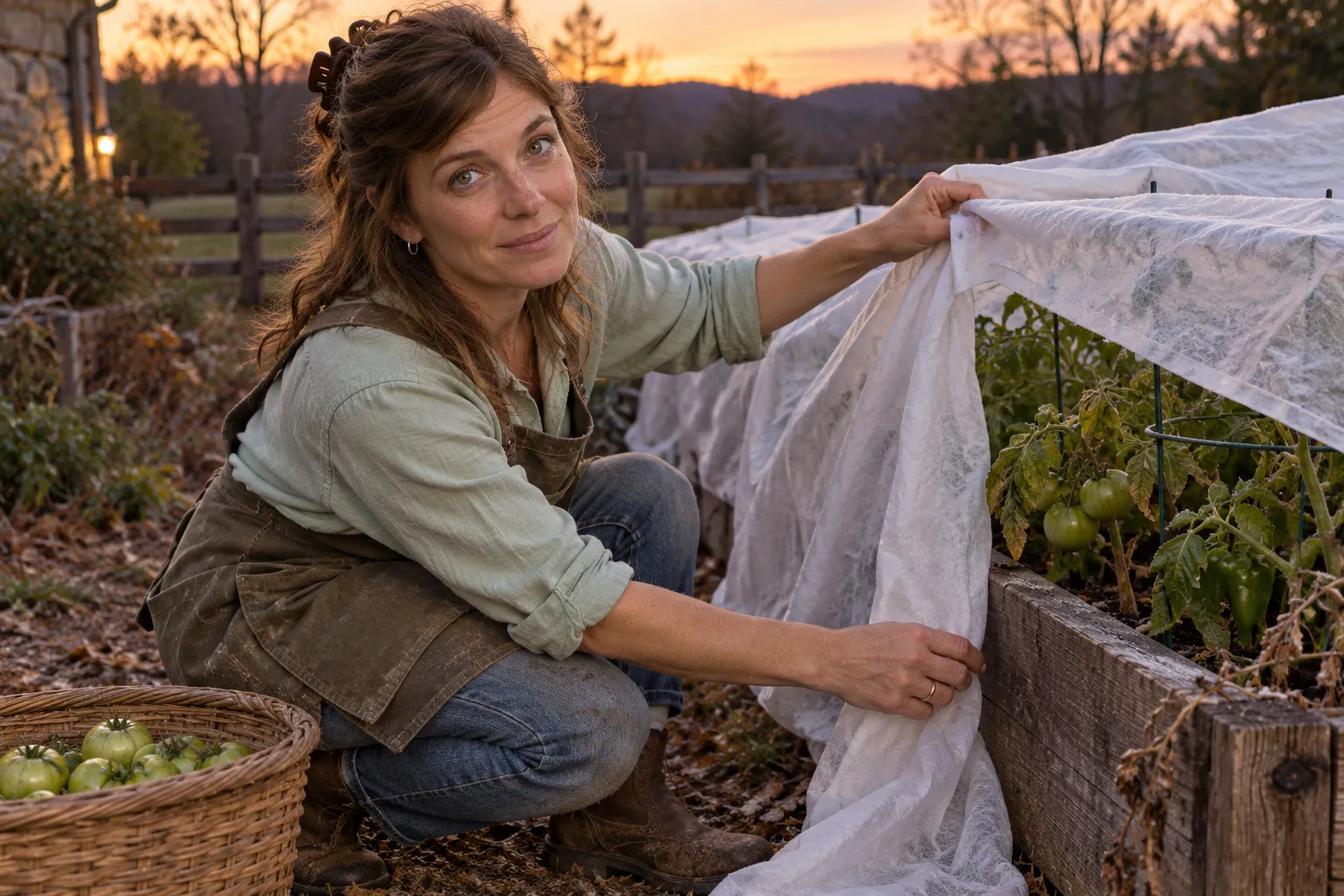
Cover in the evening. Frost cloth works best. Old bedsheets and quilts work fine for a night or two. Buckets and upside-down trash cans cover single plants.
Run the cover to the ground. The heat comes up from the soil, so I pin my cloth with bricks right at the dirt line.
Keep covers off the leaves. Iowa State and Nebraska Extension both say to hold the cover up with stakes or a frame so it doesn't touch the foliage. That goes double for plastic.
Pull the covers in the morning. Iowa State says to remove them once the air climbs above freezing. I uncover so the plants get light and don't cook on a sunny day.
One cold night is easy. Three in a row wears you down. For a cold week I set wire hoops over the bed and leave the cloth on them, so I only open the ends in the morning. I tuck a few gallon jugs of water under the tunnel too. They soak up sun during the day and give some of it back after dark.
Harvest before the hard freeze
When the forecast says 28°F, I pick every green tomato bigger than a walnut and every pepper on the plant. Green tomatoes ripen on the kitchen counter in a single layer, out of direct sun. I check them every few days and pull any that go soft. The small hard ones go into green tomato relish.
After the frost
Wait until afternoon before you judge the damage. Leaves that look dark and wet have died. Snip those off. If the stem stays firm and green, the plant often keeps going. If the whole plant has collapsed, pull it and add it to your fall cleanup (here's how I put the garden to bed).
Cover tender plants when the forecast drops into the mid-30s°F, since frost can form above 32°F. At 28°F or below, covers stop working well, so harvest anything frost-tender first.
Does frost cloth work better than a bedsheet?
Frost cloth lets light and air through, so you can leave it on for days. A bedsheet works for one night but needs to come off in the morning.
Should I use plastic or fabric?
Use fabric. If you only have plastic, hold it off the leaves with hoops or stakes.
When do I remove frost covers?
Take them off in the morning once the frost melts and the air warms above freezing.
Should I water before a frost?
Yes, if your soil feels dry. Extension advice is moist soil, not soggy. I water in the morning.
Can tomatoes survive one frost?
A covered tomato often survives a light frost. A hard freeze at 28°F or below usually kills it, so pick the fruit first.